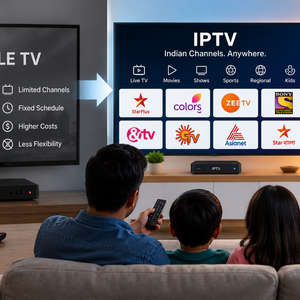
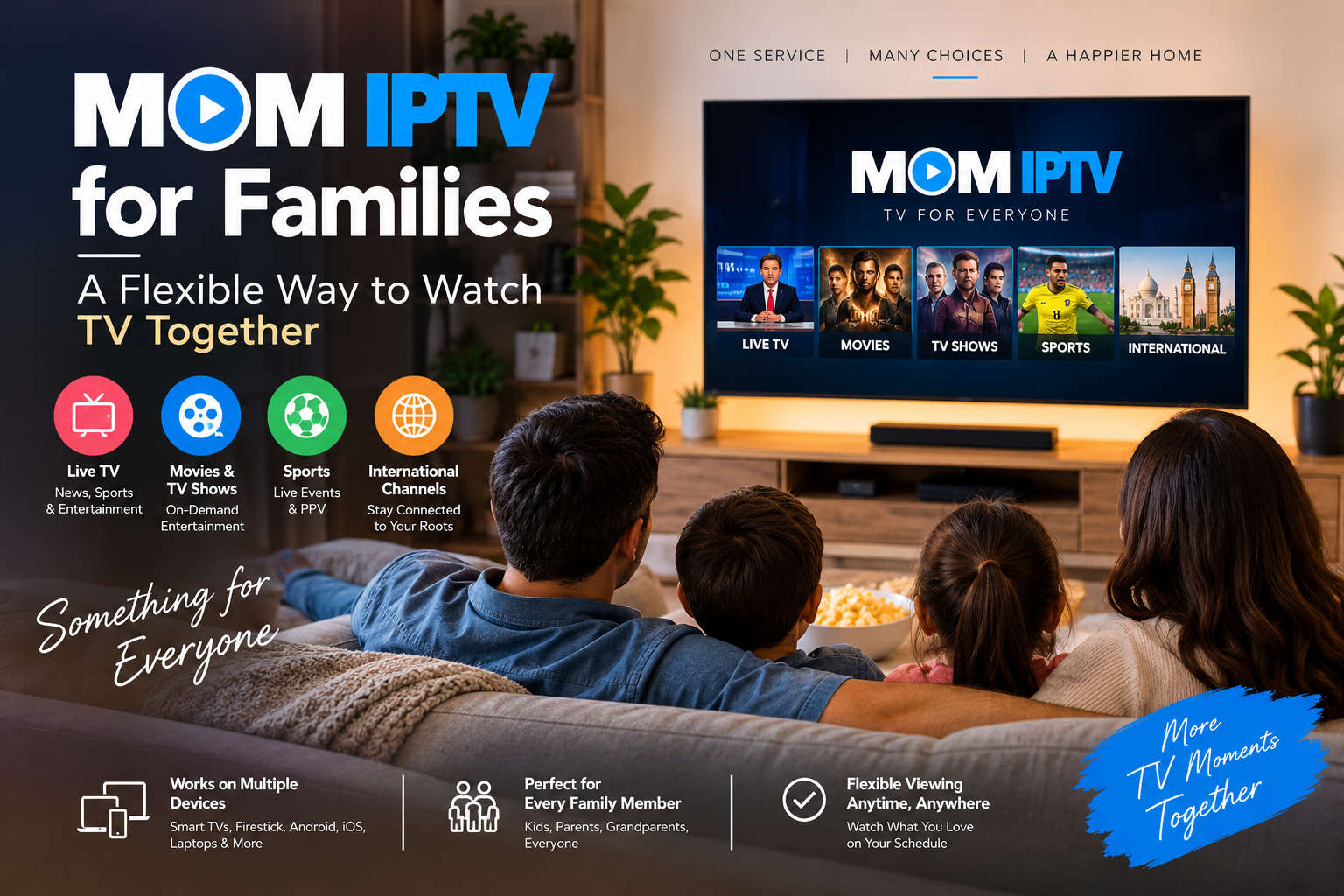
The way families watch television has changed significantly over the last few years. Instead of relying entirely on traditional cable packages and fixed television schedules, viewers now have access to internet-based entertainment that can be used across a range of connected devices.
For households with different viewing preferences, this flexibility can be particularly useful. Parents may enjoy news and live sports, children may prefer entertainment and family programming, while other members of the household may want movies or international channels.
MOM IPTV is designed around this type of flexible viewing experience. The service is promoted for viewers in the USA and Canada and offers a combination of live television, on-demand entertainment, sports, and international programming.
But choosing an IPTV service for a family involves more than looking at the number of channels advertised. Device compatibility, streaming quality, content availability, internet connection, customer support, and subscription terms can all affect the experience.
This guide explains what families should know about MOM IPTV and what to consider before choosing an IPTV service for their household.
What Is MOM IPTV?
MOM IPTV is an internet-based television service that allows compatible devices to receive television and video content through an internet connection.
Unlike traditional cable or satellite television, IPTV does not require a conventional satellite dish or cable connection to deliver its programming. Instead, content is delivered through an internet-based connection and accessed using compatible devices and applications.
Depending on the service and subscription, IPTV can provide access to different types of entertainment, including:
- Live television channels
- Movies
- TV shows
- Sports programming
- International channels
- On-demand content
- Regional programming
MOM IPTV currently promotes a combination of live TV, sports, movies, TV shows, and international content.
This makes the format potentially appealing to households where different family members have different entertainment interests.
Why IPTV Can Be Convenient for Families
One of the biggest advantages of internet-based television is flexibility.
Traditional television is often built around a fixed schedule. If a program starts at a particular time, viewers need to be available at that time unless their television service provides recording or catch-up functionality.
Internet-based services can offer a different approach.
Families may be able to watch available content on compatible devices according to their own schedules. Someone can watch a live program in the living room while another family member uses a compatible device elsewhere in the home.
The exact capabilities depend on the provider and subscription plan, but flexibility is one of the main reasons many viewers consider IPTV.
Different Family Members Can Have Different Preferences
Every household is different.
A family may have one person who follows sports closely, another who enjoys movies, and children who prefer entertainment programs.
With traditional television packages, families may end up paying for large channel bundles even though they regularly watch only a small portion of them.
An internet-based television service can provide a broader selection of content categories in one place.
MOM IPTV promotes categories such as live TV, sports, movies, TV shows, and international programming.
Before choosing a subscription, however, families should review the current channel and content lineup to determine whether it actually matches their viewing habits.
Live TV Still Has an Important Role
Although on-demand entertainment has become increasingly popular, live television remains important for many viewers.
Live sports, news, special events, television programs, and international broadcasts are often watched as they happen.
For families, live programming can also create shared viewing moments.
A major sporting event, a news event, or a popular television program can bring everyone together in front of the same screen.
MOM IPTV promotes live television alongside its on-demand entertainment options.
The availability of individual channels can change, so viewers should always check the current channel list before subscribing.
On-Demand Entertainment Gives Families More Flexibility
Family schedules are not always predictable.
School, work, appointments, meals, and other responsibilities can make it difficult for everyone to watch television at the same time.
This is where on-demand content can be helpful.
Instead of waiting for a movie or television program to appear at a particular time, viewers can choose from available content when it fits their schedule.
MOM IPTV promotes movies and TV shows as part of its entertainment offering.
The availability of specific movies and programs can vary, so customers should review the current VOD library and service terms before subscribing.
Watching on Different Devices
Another important consideration for families is device compatibility.
A household may have several different types of connected devices. One family member might primarily use a Smart TV, while another prefers a mobile phone or tablet.
The MOM IPTV service information references support for devices and platforms including Smart TVs, Amazon Firestick, Android, iOS, laptops, and PCs.
This type of compatibility can make an IPTV service more convenient for households with multiple screens.
However, compatibility can depend on the specific device model, operating system, application, and subscription. Always confirm that your particular device is supported before purchasing.
Smart TVs and IPTV
Smart TVs are one of the most convenient ways to access internet-based television.
If your television supports a compatible IPTV application, you may be able to use the TV itself rather than connecting a separate computer.
MOM IPTV’s current service information references Samsung and LG Smart TVs among its supported device categories.
The exact installation procedure depends on the television model and application being used.
When setting up IPTV on a Smart TV, make sure the application is compatible with the television’s operating system and follow the current setup instructions supplied by the service.
Firestick and Streaming Devices
Streaming devices are another popular way to bring internet-based entertainment to a television.
Amazon Firestick devices, for example, can provide access to compatible streaming applications and services.
MOM IPTV lists Amazon Firestick among its supported device categories.
A streaming device can be especially useful for households that have a television without built-in Smart TV functionality or that prefer using a dedicated streaming interface.
Before setup, check the latest application requirements and make sure the device has sufficient storage and a reliable internet connection.
Mobile and Tablet Viewing
Television is no longer restricted to the living room.
Compatible mobile devices can provide another way to access internet-based entertainment.
This can be convenient when a family member wants to watch something without using the main television.
MOM IPTV references Android and iOS devices among its supported platforms.
Mobile viewing can also be useful when travelling, although users should check the provider’s terms and any applicable regional restrictions before accessing content outside their normal location.
International Entertainment for Families
International programming can be an important factor for many families living in North America.
Households with multicultural backgrounds may want access to television programming from different countries and regions.
Instead of relying exclusively on local programming, international IPTV services can provide access to additional entertainment categories where those channels are legitimately available.
MOM IPTV promotes international programming alongside USA and Canada-oriented content.
For families interested in international channels, it is important to review the current lineup and verify that the languages and channels they want are actually included in the selected subscription.
Sports Can Be a Major Consideration
Sports are one of the reasons viewers continue to value live television.
Families may follow different sports leagues, tournaments, or events throughout the year.
When evaluating an IPTV service for sports viewing, do not rely only on general statements such as “sports included.”
Instead, check:
- Which sports channels are available
- Which leagues or competitions are covered
- Whether live events are included
- Whether availability differs by country
- Whether PPV events are offered
- Whether additional fees apply
- Whether the service has the appropriate rights to distribute the content
MOM IPTV currently promotes sports and PPV programming as part of its offering.
Because sports broadcasting rights can change, always verify current availability before subscribing.
Streaming Quality Depends on More Than the Provider
A common misconception is that the IPTV provider alone determines streaming quality.
In reality, several factors can affect the viewing experience.
These include:
- Internet speed
- Network stability
- Wi-Fi signal strength
- Device performance
- Application performance
- Server conditions
- Number of devices using the connection
- Video resolution
A household may have a fast internet plan but still experience interruptions if the Wi-Fi signal is weak or multiple devices are using significant bandwidth simultaneously.
For a better experience, use a reliable broadband connection and keep your streaming device and applications updated.
Internet Speed and IPTV
Before choosing any IPTV service, consider your home’s internet connection.
HD and higher-resolution video require more bandwidth than standard-definition streaming.
If several people are using the internet simultaneously for video calls, gaming, downloads, and streaming, the available bandwidth can be divided among those activities.
The current Indian IPTV Channels site recommends approximately 10 Mbps for HD streaming and 25 Mbps or more for 4K content.
These are useful general benchmarks, but actual requirements can vary depending on video quality, network conditions, and the number of simultaneous streams.
How to Improve Your Home Streaming Experience
If your IPTV stream is not performing as expected, several basic checks can help.
Check Your Internet Connection
Run a speed test and compare the result with the requirements recommended by your service.
Improve Wi-Fi Positioning
If your streaming device is far away from the router, the wireless signal may be weaker.
Moving the router or using a suitable wired connection can sometimes improve stability.
Reduce Network Traffic
Large downloads, cloud backups, gaming updates, and multiple simultaneous video streams can consume bandwidth.
Restart Your Equipment
Restarting the router and streaming device can sometimes resolve temporary connection problems.
Keep Applications Updated
Using an outdated application may cause compatibility or performance issues.
What Should Families Look for Before Subscribing?
Choosing an IPTV service should involve more than comparing prices.
Here are some important factors to review.
1. Content Selection
Make a list of the channels and content categories your family actually watches.
Look for the relevant sports, news, entertainment, regional, international, and family programming.
2. Device Compatibility
Check whether the service works with your Smart TV, Firestick, Android device, iPhone, tablet, laptop, or other preferred platform.
3. Streaming Requirements
Review the provider’s recommended internet speed and make sure your household connection can support the expected usage.
4. Subscription Options
Compare subscription duration, pricing, renewal terms, and any applicable policies.
Do not select a plan simply because it has the lowest advertised price.
5. Customer Support
Technical questions can arise during installation or use.
Look for clear support channels and useful setup instructions.
6. Content Rights
Make sure the IPTV provider has the appropriate rights or licenses for the content it distributes in your region.
This is particularly important when evaluating international programming, premium sports, movies, and PPV content.
Why Channel Count Shouldn’t Be the Only Factor
Large channel numbers can look attractive in IPTV advertising, but they should not be the only factor used to evaluate a service.
Imagine a service advertises thousands of channels, but your family regularly watches only a few dozen channels.
The more important question is whether the service provides the channels and content your household actually wants.
Other factors can be equally important:
Reliability:
Does the service provide a consistent viewing experience?
Compatibility:
Can everyone in the household use their preferred devices?
Support:
Can you get help when something goes wrong?
Usability:
Is the service easy to navigate?
Content quality:
Are the channels and programs you care about available?
A balanced evaluation can lead to a better decision than simply choosing the service with the biggest advertised number.
MOM IPTV for Multigenerational Households
Some families have three or more generations living under one roof.
These households can have particularly diverse entertainment preferences.
Grandparents may prefer traditional television programming and news. Parents may watch movies, sports, or international channels. Younger viewers may prefer different forms of entertainment.
An IPTV service that combines several content categories can provide more options for a mixed household.
However, each family should consider how the service’s device and subscription limitations work before assuming that every member can stream simultaneously.
IPTV and Family Viewing Habits
Technology can change not only what families watch but also how they watch.
Instead of having one television in the home that everyone uses at the same time, households now commonly have multiple connected screens.
This can provide greater flexibility, but it can also reduce shared viewing.
For families who want to continue watching certain programs together, a large-screen television remains valuable.
For individual viewing, mobile devices and additional compatible screens provide another option.
The ideal setup depends on the household’s routines and preferences.
Creating a Simple IPTV Setup at Home
A basic IPTV setup generally involves a few key components:
- A reliable internet connection
- A compatible viewing device
- A compatible IPTV application or platform
- An active subscription
- Login or activation information
The exact setup procedure depends on the service and device.
For example, the steps on a Smart TV may differ from those on a Firestick or Android device.
Always use the provider’s latest instructions rather than relying on outdated tutorials found elsewhere online.
Common Questions Families Ask About IPTV
Can IPTV replace cable television?
For some households, IPTV may provide an alternative way to access television and entertainment through an internet connection.
Whether it can completely replace cable depends on the channels, local programming, sports, and other content the household requires.
Can IPTV be used on a Smart TV?
Many IPTV services support compatible Smart TVs. MOM IPTV currently lists Samsung and LG Smart TVs among its supported device categories.
Always verify support for your exact model.
Can IPTV be used on a Firestick?
MOM IPTV’s current service information lists Amazon Firestick as a supported device category.
The specific setup steps depend on the application and current service instructions.
Does IPTV require fast internet?
A stable internet connection is important, especially for HD and higher-resolution streaming.
The required speed depends on video quality and how many devices are using the connection.
Can family members watch different content?
This depends on the provider’s subscription rules and simultaneous-stream limitations.
Always check the specific plan before assuming that multiple people can stream independently at the same time.
Is IPTV available in the USA and Canada?
MOM IPTV is currently promoted for viewers in the USA and Canada.
Content availability may vary by region, so users should review the current service information.
How to Choose the Right Plan
Before purchasing an IPTV subscription, think about how your household actually watches television.
If only one person regularly watches IPTV, a basic plan may be sufficient.
A larger household with several viewers may need to pay closer attention to supported devices and simultaneous-stream policies.
Consider:
- Number of viewers
- Number of devices
- Preferred content categories
- Streaming quality
- Subscription length
- Customer support
- Renewal terms
- Regional availability
Taking a few minutes to compare these factors can prevent problems later.
Make Customer Support Part of Your Decision
Customer support is easy to overlook when comparing IPTV services.
People often focus on channel lists and pricing first.
However, support becomes much more important when you need help with installation, account access, application configuration, or troubleshooting.
A service that provides clear instructions and accessible support can make the setup process easier, especially for users who are new to IPTV.
Keep Your IPTV Account Secure
As with any online service, account security matters.
Avoid sharing your login information publicly or with people you do not trust.
Use secure passwords where applicable and be cautious about unofficial applications or websites asking for your account information.
Only enter your credentials into trusted applications and follow the provider’s official setup instructions.
Is MOM IPTV Right for Your Family?
MOM IPTV may be worth considering for families looking for a combination of live television, on-demand entertainment, sports, and international programming through compatible devices.
The current service information highlights support for a variety of platforms, including Smart TVs, Firestick, Android, iOS, laptops, and PCs.
However, the best IPTV option is ultimately the one that matches your household’s actual needs.
Before subscribing, review the current channel lineup, supported devices, subscription terms, streaming requirements, customer support options, and regional content availability.
Final Thoughts
Television has become more flexible, and families now have more choices in how and where they watch entertainment.
MOM IPTV provides an internet-based viewing option that brings together live TV, movies, sports, and international programming for viewers using compatible devices.
For families, the biggest benefit of this type of service can be flexibility. Different household members may have different interests, different schedules, and different preferred screens.
At the same time, choosing an IPTV service should involve careful comparison. Look beyond channel numbers and consider content quality, device compatibility, internet requirements, subscription terms, support, and content rights.
If you are considering MOM IPTV, start by identifying what your family actually watches and which devices you use. Then compare those requirements with the provider’s current service information.
A thoughtful approach can help you choose an entertainment setup that fits your household instead of simply choosing the service with the biggest advertising claims.